
When you click on a sponsoring school or program advertised on our site, or fill out a form to request information from a sponsoring school, we may earn a commission. View our advertising disclosure for more details.
“We just got satisfied with what we have, and kind of lost the perception that we needed to keep producing new people with these skills.”
– Gregory Davis, MD, President of the American Society for Clinical Pathology (ASCP)
When a patient gets a blood draw, a biopsy, or a urine sample taken, that specimen doesn’t just disappear. It goes to a laboratory, where skilled professionals run the analysis that drives nearly every diagnosis and treatment decision a physician makes. Despite sitting at the center of modern medicine, medical laboratory professionals are largely invisible to the public and, increasingly, in short supply.
The shortage is not new. Even before the Covid-19 pandemic, hospitals and labs were feeling the pinch, driven largely by an aging baby-boomer workforce that built the field during its golden era and is now retiring in large numbers. The pandemic accelerated those departures, and the pipeline of new professionals has not kept pace. Today, hospitals and health systems across the country are feeling the effects of the gap.
Dr. Gregory Davis is a forensic pathologist with over three decades of experience in Birmingham, Alabama, and is the current president of the American Society for Clinical Pathology (ASCP). He has spent three decades not only practicing laboratory medicine but advocating for it: “We were not proactive in trying to attract new people into the field, and so that has come to harm us,” he says. He spoke with MedicalTechnologySchools.com about what the shortage means, why the field is worth pursuing, and what students should know before entering it.
Continue reading to learn more about the state of medical laboratory science, the career opportunities it offers, and the advice Dr. Davis has for students considering this path.
Meet the Expert: Gregory Davis, MD
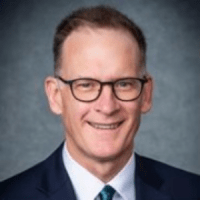
Dr. Gregory Davis is a forensic pathologist and professor at the University of Alabama at Birmingham (UAB), where he has practiced for over three decades. He serves as the chief forensic pathologist for Jefferson County, Alabama, and is the current president of the American Society for Clinical Pathology (ASCP)—the largest pathology and laboratory medicine organization in the world. He has been an active volunteer with the ASCP for nearly three decades, serving in various capacities to advance the field of laboratory medicine.
Dr. Davis has dedicated much of his career not only to practicing pathology but to advocating for the medical laboratory profession, working to increase its visibility among students, career counselors, and the broader public.
Is There a Medical Laboratory Shortage?
The short answer is yes, and it has been building for a long time. “There was a shortage even before the pandemic began,” says Dr. Davis. “During the pandemic, people who were near retirement decided to go ahead and retire, and so it made the shortage much more acute.”
The numbers back that up. According to the Bureau of Labor Statistics (2025), the field currently has about 351,200 employed clinical laboratory technologists and technicians, with roughly 22,600 openings projected each year, on average, between 2024 and 2034. Most of this demand is driven by the need to replace workers who retire or leave the field. That steady churn of openings reflects a workforce that has been aging out faster than new professionals are entering.
Demand is also growing from the other direction. An increase in the population of older adults is expected to lead to a greater need for diagnosing conditions such as cancer and type 2 diabetes, and genetic testing is being used more frequently to aid in diagnosis and treatment. More patients needing more tests means the pressure on an already strained workforce will only intensify.
The causes go beyond retirement alone. Dr. Davis points to a profession that has historically stayed out of the spotlight. “Pathology has a reputation for being people behind the scenes. You don’t know they’re there,” he says. “If we don’t make ourselves visible, how is anyone going to even know that we exist?” For decades, he argues, the field got comfortable with the workforce it had and stopped planting seeds for the future. “We just got satisfied with what we have, and kind of lost the perception that we needed to keep producing new people with these skills.”
That mindset, combined with an aging workforce and declining program enrollment, is what turned a slow burn into an acute shortage. The good news is that the field is finally paying attention.
Why Choose a Career in Medical Laboratory Science?
For students weighing their options in healthcare, medical laboratory science offers something that is easy to overlook from the outside: direct involvement in the care of nearly every patient who walks through a hospital’s doors: “The laboratory is providing data that are necessary for the care of 90 to 93 percent of patients in the hospital,” says Dr. Davis. That includes patients who never set foot in a hospital at all, whose bloodwork is drawn at a physician’s office and sent off to a lab somewhere for analysis.
The work carries real weight. When a patient receives a cancer diagnosis, the pathology laboratory makes the determination that shapes their treatment and their chances of recovery. “You’re the one making the determination that’s going to make the difference in this person’s life,” says Dr. Davis. “I think that’s a very important part of the job, that you can feel proud that that’s the work that you’re doing.”
The field also offers meaningful variety. Depending on a student’s interests, they might end up in cytology, examining cells under a microscope, or in blood banking, ensuring safe transfusions. They might work in microbiology, identifying bacteria to determine the right antibiotic, or in genetics, analyzing tumor DNA to guide cancer treatment. The laboratory touches almost every corner of medicine.And unlike some healthcare roles that require a decade of training before a livable salary, entry into this field is accessible. Phlebotomy positions are available with just a high school diploma, while a two-year associate’s degree opens the door to medical laboratory technician roles, and a bachelor’s degree qualifies graduates as medical laboratory scientists.
Skills and Qualities for Success in Medical Laboratory Science
Students sometimes assume that laboratory work means working alone, heads down, with little need for people skills. Dr. Davis pushes back on that. “We see and talk with people all the time, the same as anyone else,” he says. “You need to make certain that you are able to interact and work with a team, because medicine is completely practiced as a team approach these days.”
Beyond teamwork, the work demands a particular kind of focus. Lab professionals handle large volumes of specimens at once and need to stay organized while also staying alert to anything that requires special attention. “You need to be able to recognize that this particular test tube requires special attention that the others may not,” says Dr. Davis. “So you’re constantly juggling all of these sorts of things.” It is detail-oriented work with real stakes, where a missed anomaly can affect a patient’s diagnosis.
On the technical side, Dr. Davis recommends that high school students interested in the field take science classes as a foundation, since laboratory medicine is essentially applied biology and chemistry. Computer fluency matters too. Familiarity with spreadsheets and word processing is expected, and comfort with more specialized laboratory software will develop on the job. What students do not need to worry about is becoming a programmer.
In Dr. Davis’s view, the profile of a strong candidate is someone who is organized, curious, and comfortable working as part of a larger care team. The behind-the-scenes reputation of the field does not mean to be isolated.
How AI and Technology Are Changing Medical Laboratory Science
One of the most common concerns students bring to any healthcare career conversation right now is whether automation will eventually eliminate the need for human professionals.
Dr. Davis, who has been hearing that question for his entire career, is not worried. “I’ve heard about computers replacing what it is that pathologists and laboratory professionals do since I started my career,” he says. “It hasn’t yet.”
That is not to say technology is standing still. AI tools are increasingly used to help laboratory professionals and pathologists review slides and flag areas warranting closer attention. But Dr. Davis sees that as a complement to human judgment, not a replacement for it. “Computers are very good at not getting tired, not missing something,” he says. “What humans are very good at is thinking outside the box.”
In practice, the two work best together. A computer might identify the areas of a microscope slide most likely to contain a problem, allowing the professional to focus their attention efficiently. But a capable lab professional will still review the whole slide, cross-check their own findings against the computer’s, and apply the kind of contextual reasoning that no algorithm has yet been able to replicate. The diagnosis, ultimately, still belongs to the human.
For students entering the field today, this means that technology is less a threat than a tool. Learning to work alongside AI and automated systems will be part of the job, but to Dr. Davis, the core skills of observation, analysis, and critical thinking remain as relevant as ever.
What Schools and Health Systems Can Do to Address the Shortage
The pipeline problem is not just about students failing to discover the field. It is also about institutions failing to keep the programs alive. “Some universities are closing the programs because they haven’t had much interest, or they’re having to make financial choices and they decide to cut it,” says Dr. Davis. The ASCP has made it a priority to intervene when programs announce closures, with mixed results. Some have been persuaded to stay open. Others have not.
On the awareness side, the ASCP has taken a proactive approach. About five or six years ago, the organization began attending conferences for high school and college career counselors, a group that had largely never been exposed to laboratory medicine as a career option. They brought hands-on demonstration kits, developed with support from the CDC, that let counselors simulate basic blood bank and microbiology work. The goal was simple: make the career feel real to the people who guide students every day.
Dr. Davis also encourages individual laboratory professionals to do their part by saying yes when students come knocking. “If someone shows interest, make time for them,” he says. He met with two high school students the week of our conversation and had a medical student scheduled for the following week. That kind of one-on-one visibility, multiplied across the profession, is how he believes the field will ultimately turn the tide.The ASCP has also launched a website, WhatsMyNext.org, where students can explore the different specializations within laboratory medicine and find pathways into the field that match their interests and education level.
Advice for Students Considering Medical Laboratory Science
For students who are still in high school, Dr. Davis has a clear starting point: take science. “You should be taking biology and chemistry, because those are integral to this field,” he says. Physics is worth considering too, less for its direct application and more for the scientific thinking it builds. Paired with solid computer skills and familiarity with basic software, that foundation will serve students well when they begin formal training.
But the advice that surprises most people is to work on your people skills. The image of a lab professional as someone who never interacts with other people is simply inaccurate, and students who enter the field expecting to keep to themselves may be surprised. Teamwork is not optional in modern medicine. It is the whole point.
For students who are ready to explore, Dr. Davis points to WhatsMyNext.org as a good first stop. The site outlines the range of roles available in laboratory medicine and can help students determine which corner of the field might suit them best, whether that is microbiology, genetics, cytology, blood banking, or something else entirely.
The shortage that has defined this field for the past several years is, in another light, an opportunity. Jobs are available, the work is meaningful, and the profession is actively looking for its next generation. As Dr. Davis puts it, “There’s a great need everywhere. You can work where you might want to be.”