
When you click on a sponsoring school or program advertised on our site, or fill out a form to request information from a sponsoring school, we may earn a commission. View our advertising disclosure for more details.
“Precision medicine is about finding the best treatment for each individual at the right point in time and for the right disease. We’re trying to make sure that the treatments that we prescribe or recommend to patients are the most effective for them personally, and making sure we’re matching the treatment to the patient and sometimes even to the cell type of their disease.”
– Norrina Bai Allen, PhD, Vice Chair for Research in the Department of Preventive Medicine, Director of the Institute for Public Health and Medicine at the Feinberg School of Medicine, Northwestern University
Precision medicine, a revolutionary approach to healthcare, tailors treatment to the unique genetic makeup of an individual. This method departs from the traditional “one-size-fits-all” approach, considering the unique genetic variations, lifestyle, and environmental factors that influence each person’s disease progression and response to treatment.
The core objective of precision medicine is to provide personalized care that maximizes treatment efficacy by aligning therapeutic interventions with each patient’s unique needs and disease characteristics. The concept of precision medicine has its roots in the Human Genome Project. This global research endeavor began in 1990 to identify and map all the genes present in the human genome.
Upon its completion in 2003, the project opened up new avenues for understanding health and disease at the molecular level. Over the next decade, advancements in genomic technology and data analysis capabilities allowed for the practical application of these insights in clinical settings, leading to the emergence of precision medicine. This approach has since made substantial strides, heralded as the future of healthcare by many in the medical and scientific community.
At the heart of precision medicine is biomedical informatics. It forms the backbone of this method, providing the tools and techniques necessary to analyze and interpret the vast amounts of data generated through genomic sequencing and other diagnostic tests. Biomedical informatics enables the collection, storage, retrieval, and optimal use of biological and health data for decision-making. It combines computer science, data science, and healthcare principles to manage and analyze patient data, thereby facilitating the identification of precise disease markers and tailoring treatments.
Read on to learn the various applications of precision medicine, the ethical considerations surrounding this approach, and its potential future implications.
Meet the Expert: Norrina Bai Allen, PhD
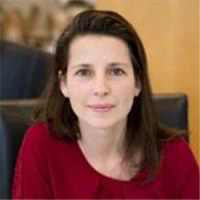
Dr. Norrina Bai Allen is the Quentin D. Young Professor of Health Policy at Northwestern University Feinberg School of Medicine and serves as vice chair for research in the Department of Preventive Medicine. She is also director of the Institute for Public Health and Medicine’s Center for Health Services and Outcomes Research, where she leads initiatives focused on improving population health and healthcare delivery.
Dr. Allen is a nationally recognized cardiovascular epidemiologist whose research takes a life course approach to understanding heart disease risk, with particular emphasis on blood pressure, prevention strategies, and health equity. Her work integrates large cohort studies, health systems data, and policy perspectives to advance prevention and improve long-term cardiovascular outcomes.
2026 Precision Medicine Update
Since precision medicine first emerged from the genomic revolution, the field has made remarkable strides in research and academic settings. But as Dr. Allen sees it, the most exciting work ahead lies in bridging that gap between scientific discovery and real-world clinical care, getting the right interventions to the right patients, at the right time: “I think that’s the opportunity where we can really change and improve the health of our country,” she says. Recent advances in AI, machine learning, and implementation science are bringing that vision closer to reality, reshaping everything from how treatments are identified to how they reach patients.
How AI and Machine Learning Are Advancing Precision Medicine
The tools used to identify the right treatment approach for each individual have changed significantly in recent years. According to Dr. Allen, the biggest shifts have come with “the inclusion of AI, machine learning, and big data powerhouses,” which allow clinicians and researchers to analyze patient information in a much more sophisticated way than ever before.
In cardiovascular care, for example, risk prediction equations that once relied on traditional statistical models are now being built using machine learning. This makes them better at detecting differences between individual patient groups based on personal characteristics, helping guide decisions around treatment intensity and dosage.
AI is also being deployed across clinical settings to synthesize electronic medical record data, helping physicians quickly extract the key facts they need to make informed care decisions, streamlining a process that was once time-consuming and easy to overlook.
Precision Medicine, Behavioral Interventions, and Prevention
Precision medicine is increasingly expanding beyond medications and into behavioral and lifestyle interventions. Dr. Allen notes that “not the same intensity of behavior modification or education is needed for everyone,” some patients simply need better information to make healthier choices, while others require more hands-on support, such as guidance on cooking and nutrition.
This tailored approach to health promotion reflects a broader shift toward precision prevention, applying the same individualized thinking to keeping people healthy before disease ever develops. Rather than prescribing a universal diet or exercise plan, clinicians are working to understand what will actually work for each person, given their metabolism, background, and culture.
Importantly, this work also accounts for the environments people live in. Dr. Allen emphasizes that neighborhood conditions, family context, and larger policy differences all shape individual health outcomes, what she describes as “the socio-ecological approach to understanding the influences of health for an individual.”
Implementation Challenges and Access to Care
Even as precision medicine advances, Dr. Allen identifies implementation as “probably where we’re challenged the most at the moment.” Knowing who will benefit from a treatment is only part of the equation; the harder work lies in helping providers act on that knowledge and ensuring that policy, coverage, and healthcare access make those choices available to all patients.
This is particularly difficult in the United States, where the lack of universal healthcare coverage creates a fragmented funding landscape. The financial returns from prevention, especially for long-term conditions like cardiovascular disease, may not materialize for 40 to 60 years, and often flow back to a different funding source than the one that paid for the intervention.
As Dr. Allen explains, in countries with universal coverage, prevention benefits society as a whole, making it far easier to justify and sustain. Closing this gap between what precision medicine can offer and who can actually access it remains one of the most pressing challenges in the field today.
The Role of Translational Teams in Advancing Precision Medicine
One of the most critical strategies for increasing the real-world impact of precision medicine, according to Dr. Allen, is to build translational teams that are involved throughout the entire development pathway, not just at the research stage.
Too often, promising tools and treatments are developed without anyone on the team who has expertise in clinical care or implementation. By the time those innovations reach the clinic, they simply don’t fit into existing workflows and fail to make an impact.
Dr. Allen is careful to distinguish this from the interdisciplinary collaboration that science already embraces. Interdisciplinary teams often bring together experts from multiple fields, but those experts are frequently all working at the same stage of the research process. What’s missing, she argues, is people from further along the translational spectrum, those who will actually take findings and apply them in a clinic or community setting.
“I think we have to have people who are working on the next step,” she explains. That means embedding implementation scientists, clinician scientists, academic researchers, methodologists, statisticians, and ethicists together on the same project from the start. “That is the part of science where we need a lot of different voices and a lot of different expertise to enable practical and impactful solutions to happen in the community.”
Differences Between Precision Medicine and Traditional Healthcare
Precision medicine and traditional healthcare vary greatly in their treatment approaches: “In medicine, we generally identify what the problem, disease, or underlying symptom is, and then we have the medication, intervention, or treatment that has proven across the population to be the most effective from clinical trials,” shares Dr. Allen.
This is a general method in which standard treatments are applied broadly to all patients with a specific disease, with adjustments based on age, weight, or other basic factors. While this approach is based on the average response of a large population, it doesn’t consider the genetic and environmental factors that can significantly influence a person’s response to treatment.
“What we’re realizing now is that the most effective treatment for one individual with a particular disease is not necessarily the most effective treatment for another individual with that same disease,” explains Dr. Allen. “So precision medicine, or ‘personalized medicine’ as it is sometimes called, is really about trying to find the treatments that will work best for each individual and making sure that those treatments are tailored to them. It began with the era of genetics with cancer treatments, where knowing someone’s DNA could tell physicians which drug was going to be most effective for that individual and for the disease that they had.”
Applications
Using a precision medicine approach allows healthcare providers to predict more accurately which treatment and prevention strategies for a particular disease will work for which groups of people. It is already being used in treating certain cancers. It holds the promise of delivering better outcomes by identifying the therapies that will work best for each patient before treatment starts: “We have started to move beyond cancer. Now, it has transformed the way we think about treating individuals, not just a disease,” says Dr. Allen. “In cardiovascular disease, there are several important genetic markers that determine who’s at most risk and which drug might be most effective.”
As this field continues to evolve, it has expanded: “We now can move into almost every realm of medicine and try to think about treating the patient, not just the disease. Even though it was originally developed to think about personalization in terms of the genetics of an individual and their cancer cells, it has now expanded to include thinking about their life experiences, their demographic factors, and all the other things that go into determining the health and well-being of an individual,” says Dr. Allen.
Life experiences and individual responses to treatment also play significant roles: “We know that individuals have different backgrounds, experiences, and stressors in their lives. All of those factors into a patient’s response to treatment. Some treatments work well for people with a lot of social support that can help them manage a complex treatment regimen,” says Dr. Allen. “For those that don’t have as much support, that’s not going to be an effective line of treatment. We need to identify a treatment that, based on genetics and all other clinical factors, provides the highest quality care and the most effective treatment for each individual.”
Even though precision medicine was initially developed as a reactive care for cancer, it has the potential to expand the field of preventative medicine. “My work is really about prevention. How do we prevent the onset of heart disease? Part of the precision approach has been applied to treating diet and physical activity and some lifestyle behaviors preceding heart disease. So, there’s a move now for a precision diet. We used to believe that there was a best diet and that it was a one-size-fits-all kind of approach. Now we realize that there will not be a one-size-fits-all diet because of people’s metabolism, background, and culture. We’re starting to try and understand the ideal diet for each individual and each circumstance,” shares Dr. Allen.
Tools and Technology Used in Precision Medicine
Various tools and technologies are utilized to effectively implement precision medicine. These include genomic sequencing, advanced imaging techniques, biomarker identification methods, bioinformatics software, electronic health records (EHRs), and more. Each of these plays a vital role in collecting, storing, analyzing, and utilizing patient data to inform precision treatment strategies.
Genomic sequencing is perhaps the most crucial tool in precision medicine. It enables a comprehensive analysis of an individual’s genetic makeup and can identify potential disease or condition markers. “The first technology that brought about precision medicine was low-cost genotyping, which helps identify a person’s genetic makeup,” says Dr. Allen.
Bioinformatics software is another essential tool used in precision medicine. It enables the efficient collection, storage, and analysis of vast amounts of patient data. This enables healthcare providers to identify patterns and trends in the data that can inform more targeted treatment strategies: “We are starting to explore digital technologies. We are asking not only whether this is the right treatment for this patient and their disease, but also whether it is the right time. Now, we have different ways to track health and well-being digitally, so we can figure out when someone is starting to feel sick and when their symptoms start. We can then explore when to initiate treatment and hopefully intervene early,” explains Dr. Allen.
Ethical Considerations
As with any emerging technology, precision medicine raises ethical considerations that must be carefully considered. Major concerns include the potential for discrimination based on genetic information, which could lead to individuals being denied employment, insurance coverage, or other opportunities due to their predisposition to certain diseases; the safety and security of patient data; and the ethics of using it for research and drug development.
Ultimately, the largest ethical concern lies in the access to these cutting-edge treatments that can potentially improve health: “We worry a lot about health equity and reducing the disparities that unfortunately exist in healthcare and prevention,” shares Dr. Allen.
“Precision medicine can be part of creating equity, in terms of ensuring everyone is getting the most effective intervention or preventive efforts they need. But it takes more time because you have to understand each person’s genetic and clinical makeup. We must consider how that will impact settings where there are fewer resources to spend on that extra time to do genotyping, deep phenotyping, and learn about each individual. We are balancing between pragmatic approaches and the personalized approach that may overwhelm lower resource settings.”
The Future of Precision Medicine
The future of precision medicine is promising. With advancements in technology and data analysis, precision medicine has the potential to transform healthcare by providing more personalized and effective treatment options for patients. As more data is collected and analyzed, healthcare providers can make more informed decisions about preventive measures and treatment plans for each individual. “In the next five to ten years, I think you will see it expand. Right now, it’s mostly cancer and cardiovascular disease, but I think it’s going to kind of become the expectation across all of healthcare that we treat people as individuals and think about how their experiences influence their treatment,” notes Dr. Allen.
One of the biggest hurdles yet to be conquered is gathering information: “I think there’s going to be a lot of work to figure out the most important things we need to know about an individual and a specific setting that will influence treatment. How do we ensure we get the information that is really important in an easy way that’s possible across all different healthcare settings and for people with different social determinants of health and socioeconomic status?” asks Dr. Allen.