
When you click on a sponsoring school or program advertised on our site, or fill out a form to request information from a sponsoring school, we may earn a commission. View our advertising disclosure for more details.
“First and foremost, surgical technologists are the patient’s advocate. The importance of maintaining a sterile field [in an operating room] and being able to speak up if there’s a break in technique—whether it’s the surgeon or the assistant or someone from the unsterile team—they need to be able to speak up, correct whatever has gone wrong and be an advocate for that patient.”
– Mona Bourbonnais, Surgical Technologist, Program Director, and Associate Professor at the College of Western Idaho
If you have a passion for helping people and seek a career with stability, a career in the healthcare industry may be right for you. The sense of fulfillment and purpose that being in the service of healing people gives is unmatched by most other occupations. And because society is always in need of qualified professionals to keep our healthcare infrastructure running smoothly, there is always a demand for entrants.
Those who do not aim to become a physician or surgeon but have a vocation for care often default to nursing because it is in high demand and pays well but requires less of a time investment to qualify. But over the last twenty years, the path to becoming a nurse, which was once a fairly accessible career, has become notoriously competitive, with schools raising acceptance requirements to help filter the abundance of applicants.
But nursing isn’t the only healthcare career that requires less time in school than becoming a physician or surgeon and still pays a decent wage. Different kinds of medical technicians and technologists receive higher pay than you might think.
For instance, certified surgical technologists (CSTs) make good money and are in high demand. As the population grows and advances in medical technology make surgery safer than ever before, the employment of these professionals is projected to increase by 4 percent over the period between 2024 to 2034, faster than the average for all occupations during the same decade (3 percent).
And most programs for CSTs are only between 12 and 24 months in length, so you could be on the floor of an operating room making a family wage within a year and a half of being accepted to a CST program. Sounds great, right? Well, before you start submitting applications, there are a few things you should know about the career first.
We talked to the program director of the College of Western Idaho’s surgical technology program, Mona Bourbonnais, about the top tips she has for potential students.
Meet the Expert: Mona Bourbonnais
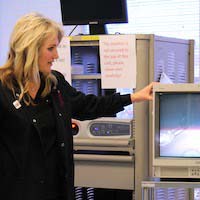
Mona Bourbonnais was a surgical technologist for 30 years and is a fellow of the Association of Surgical Technologists. In 1999, she became the director of the surgical technology program at Boise State University, which has been offered since the early 1970s. Over the years, she completed her BS in professional technical education and an MS in adult education and organizational leadership from the University of Idaho.
In 2009, BSU’s surgical tech program was transferred to the College of Western Idaho (CWI), where Bourbonnais continued to direct the surgical technology program and also taught as an associate professor. She currently serves on the Board of Directors for ARC/STSA, the accreditation agency for surgical technologists and assistants.
Recognition & Professional Advocacy – National Surgical Technologists Week
The work performed by surgical technologists is often invisible to patients and the general public. This is primarily due to the fact that surgical technologists don’t interact with patients under anesthesia. However, surgical technologists are instrumental in setting up and maintaining a sterile surgical field and should be recognized for the hard work they do.
In 1984, the Association of Surgical Technologists (AST), the national organization for professionals in this field, designated the third week in September as National Surgical Technologists Week. In 2026, it will be celebrated September 20-26. This week is an excellent time for employers, surgical technologists, and community members to acknowledge this career and publicize the work that they do.
There are several ways for employers and the public to provide recognition and visibility to surgical technologists during this week. Schools, libraries, and community centers can host talks where surgical technologists share about their profession. Employers can publicize their hard-working surgical technologists in social media and press releases, through in-house signage, and with a patient education campaign. At a minimum, employers should deliver a thank-you letter to their surgical technologists.
National Surgical Technologists Week is also an excellent time to discuss the regulatory and licensing issues facing this profession. Surgical technologists are only required to be licensed in 13 states, which means in the rest of the states, there are no requirements whatsoever for key members of a surgical team.
The AST advocates for all states to implement licensing for surgical technologists to ensure the highest level of patient care. These licensing requirements would include graduating from an accredited surgical technology program and earning a Certified Surgical Technologist (CST) credential from the National Board of Surgical Technology and Surgical Assisting (NBSTSA).
The Local Demand for Surgical Techs May Vary
While the BLS reports that demand for surgical techs is expected to increase across the U.S. in the next ten years, depending on your precise location, the need for CSTs may be very high or non-existent.
If you are in a city, chances are there will be plenty of jobs, but some degree of competition for the most sought-after employers. If you are in a more rural area, job availability depends on whether or not there are hospitals and/or surgery centers nearby and the turnover rate of CSTs at those institutions.
Licensing requirements for surgical technologists can also significantly impact demand. States that require surgical technologists to be licensed have much higher demand, as education and certification requirements must be met. Conversely, states in which anyone can work in surgical technology tend to have fewer jobs available.
If you are concerned about finding a job after you graduate, ask the school if they help with job placement and what their placement rate is.
“We had a 100 percent placement rate. I don’t like to use that term necessarily, because students are responsible for finding their own jobs after they graduate. But I feel that the demand for CSTs in the Pacific Northwest is very high,” Bourbonnais said. “One of the largest employers in the state of Idaho is St. Luke’s Regional Medical Center and they were always requesting that we increase our enrollment.”
You can also check the Association of Surgical Technology’s career center page or your city’s Glassdoor or Indeed pages to see how many and how often listings for CSTs are posted. Additionally, here is a surgical technology career guide.
Surgical Techs Can Make a Six-Figure Income
Most websites report that CSTs only make about $60,000 to $70,000 per year, which is true in some cases, but this doesn’t paint an accurate picture of how much most surgical techs truly earn. It depends on a couple of factors: geographic location and facility type.
Although in the past, pay for surgical technicians tended to be higher on the West Coast than on the East Coast, that has changed, according to the Bureau of Labor Statistics (BLS). The states paying the highest annual salaries as of May 2024, the latest data available as of April 2026 are:
- California – $83,240 annual mean wage
- Oregon – $78,460
- Connecticut – $77,760
- Massachusetts – $77,630
- Minnesota – $77,190
Some differences are apparent in starting wages, as follows:
- Oregon – $28.61 10th percentile hourly wage
- California – $27.44
- Alaska – $25.41
- Wisconsin – $25.41
- Rhode Island – $25.35
- Washington – $25.32
“If we’re talking about Idaho, the starting salary is about $22 to $23 per hour as a new graduate, and I would say probably $38 for an experienced CST,” Bourbonnais said.
The Bureau of Labor Statistics (BLS) reports average yearly incomes of surgical techs across the U.S. by workplace type. According to its data, CSTs who work in hospitals (which are the most common workplace of CSTs) earn about $63,260 annually.
However, there should be a huge asterisk next to that figure because it only represents the base pay. The amount of money that CSTs that work in hospitals actually bring home can be more than double that amount.
Working at a hospital means that most surgeries are emergencies—or at least unplanned—so CSTs are often on call, and they are paid an extra hourly rate if they are not called in, and time-and-a-half if they are called in.
Shift differential—which is similar to being on call, but refers specifically to the extra compensation an employee receives for working a less desirable shift—can bring in an additional amount if you are not called in. If you are called in, then you are paid time-and-a-half plus travel expenses.
If you are willing to be flexible with your schedule, you can take advantage of these extra payment opportunities and wind up making well over $100,000 per year.
Outpatient surgery centers, however, do not provide these extra opportunities because surgical operations are planned in advance, so scheduling shifts is much easier and keeping CSTs on call is not necessary. Here, the $60,000 to $70,000 salary range is more accurate. While income is lower, people that are more comfortable having a predictable schedule prefer working in outpatient centers.
For comparison’s sake, the path of becoming a registered nurse (RN) generally requires completing a four-year program and on average, earns about $98,430 per year, according to the Bureau of Labor Statistics (May 2024). Medical assistants and dental assistants programs are usually about the same length as surgical technology programs and have average salaries of $44,720 and $48,860 per year, respectively.
Surgical Technologist Working Conditions Aren’t for Everyone
This may seem like an obvious point, but it is worth noting. If the sight of blood, incisions, or the smell of burning flesh makes you feel woozy, this career path may not be for you. You don’t want to be the one in the operating room that faints and potentially distracts the surgeon from focusing on the procedure. But if you think there’s a chance you could become comfortable with a little exposure, then don’t cross surgical technology off your list just yet.
A 2009 study found that of 630 medical students, 12 percent passed out or came close to passing out in the operating room on their first attempt, but many improved after returning on a later date. Ensuring a proper meal and staying hydrated on the day of surgery was also shown to have a positive effect on survey respondents.
Another important aspect of CST’s working conditions is that they work long shifts, sometimes eight hours, depending on the length of the surgery. If you are not able to stay on your feet for hours at a time, this may be more of a problem.
Surgical Technologists Need to Learn a New Language
Well, they need to learn the language of medicine, that is.
“Once they get into the program, some students ask what they can do over the summer to help prepare,” Bourbonnais said. “One of the things I tell them is they must have a really good working knowledge of medical terminology, anatomy, and physiology because that’s the language of surgery and medicine. It’s going to be used immediately when you’re in the program, and once you’re in the hospital for clinical rotations, people expect you to use that language.”
It also doesn’t hurt to brush up on sterile processing knowledge before you start your program, which is a big part of the job.
“Sterile processing allows the students to know the instruments themselves and what it means to take care of the instruments and equipment,” Norma Chypert, the director of the surgical tech program at Linn-Benton Community College added. “If a student comes in with prior knowledge of instruments, they are way ahead of all the other students.”
The Importance of Patient Advocacy
The ease of entry into surgical technology and its earning potential are big draws for students exploring different occupations within healthcare, but Bourbannis emphasized that potential entrants should think deeply about the CST role before making up their minds.
“One of the most important things we look at when we are making a selection from our pool of applicants for our cohort of students every year is that they really understand the role of a surgical technologist,” Bourbonnais said. “If they can’t articulate what a surgical technologist actually does, we know they haven’t done the research and they don’t understand the role, so they’re not going to be successful in the program.”
CST’s duties include preparing patients for procedures, preparing the operating room, gathering and sterilizing surgical instruments, passing instruments to surgeons during procedures, and inventorying surgical supplies. But their most important job?
“First and foremost, surgical technologists are the patient’s advocate. The importance of maintaining a sterile field [in an operating room] and being able to speak up if there’s a break in technique—whether it’s the surgeon or the assistant or someone from the unsterile team—they need to be able to speak up, correct whatever has gone wrong and be an advocate for that patient,” Bourbannis explained.