
When you click on a sponsoring school or program advertised on our site, or fill out a form to request information from a sponsoring school, we may earn a commission. View our advertising disclosure for more details.
“With more workload removed from the drug distribution and administration, the pharmacy technician could really step up.”
– Tianze Jiao, PhD, Assistant Professor, University of Florida College of Pharmacy
Pharmacy technicians are the operational backbone of the pharmacy. They count and label prescriptions, manage inventory, process insurance claims, and keep medications moving out the door accurately and on time. It is detailed, repetitive work, and there is a lot of it.
That work is starting to change. Automated dispensing systems and AI tools that screen prescriptions for drug interactions are taking over many of the routine tasks that have long filled a technician’s day. “With the additional time, they will get more patient-facing responsibilities,” says Dr. Tianze Jiao, a researcher at the University of Florida College of Pharmacy who uses AI to study drug safety and interactions.
The field is large and growing. According to the Bureau of Labor Statistics (2026), there were 490,400 pharmacy technicians employed in the United States, and the profession is projected to grow 6 percent between 2025 and 2035, faster than the average for all occupations. The BLS attributes rising demand to an aging population that takes more prescription medications, the growing prevalence of chronic disease, and pharmacists taking on more direct patient care, which shifts additional responsibilities onto technicians.
Continue reading to learn how AI is reshaping the pharmacy technician’s role from Dr. Jiao, including what new skills the job demands and how students can prepare.
Meet the Expert: Tianze Jiao, PhD
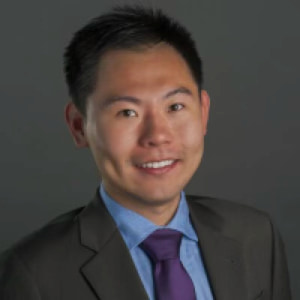
Dr. Tianze Jiao is an assistant professor in the Department of Pharmaceutical Outcomes and Policy at the University of Florida College of Pharmacy. He is a pharmacoepidemiologist whose research focuses on cardiovascular and cardiometabolic disease, using large databases such as electronic health records and insurance claims, along with advanced analytics like causal inference modeling and machine learning, to assess the comparative safety of medications and identify drug-drug interactions.
He earned his PhD from the University of Utah and completed a postdoctoral fellowship at McGill University before joining the University of Florida faculty in 2022. His research has been funded by the Canadian Institutes of Health Research, the CDC, and the Bill and Melinda Gates Foundation.
The Shift from Dispensing to Verification
For most of the profession’s history, a technician’s core job has been to fill the prescription. Automation is changing what that means. When dispensing machines and AI systems can handle the physical fill, the technician’s value shifts to verifying that the output is correct, both the machine’s and the prescription’s.
“The technician also needs to review some of the potential drug interactions,” Dr. Jiao says. “They may not be the one to make the final decision, though. There could be an error from the algorithm saying these two drugs shouldn’t be used at the same time, and then the technician may catch it and talk to the pharmacist. Especially for the first couple of rounds or iterations of the algorithm, there can be lots of mistakes.”
This kind of verification work already has a formal credential behind it. The Pharmacy Technician Certification Board offers a Technician Product Verification certificate, which trains technicians to perform the final accuracy check on medications dispensed by pharmacists or automated systems, confirming the product name, strength, quantity, packaging, and expiration date. It is one of several advanced certificates, along with a Medication History credential, that feed into the board’s Advanced Certified Pharmacy Technician designation, earned by completing at least four certificates and three years of work experience.
The scope of what technicians are legally allowed to verify is expanding as well. A 2026 report from the National Alliance of State Pharmacy Associations found that final product verification, sometimes called tech-check-tech, is now authorized in some form in 31 states. The report, developed by a national workgroup of pharmacists, technicians, educators, and regulators, recommended that states adopt consistent standards allowing technicians to verify final products, take verbal orders, and transfer prescriptions, all with the goal of freeing pharmacists to focus on clinical care.
Jiao sees this as the technician becoming the last check before the pharmacist signs off. “They can confirm whether the algorithm is doing it right, as the last barrier to confirm all of the decisions by the model before the pharmacist verifies everything,” he says.
Knowing How the Algorithm Works
If technicians are going to catch the algorithm’s mistakes, they need to understand how the algorithm works in the first place. For Dr. Jiao, that is the single most important skill for someone entering the field today.
“First of all, knowing the algorithm, because if you don’t know how the algorithm works, you would never know which part can go wrong. What information feeds into the distribution algorithm, and which part could create an error,” he says. “It also applies to the drug-drug interaction model.”
The interaction models Dr. Jiao describes are already widely used, and their limitations are well documented. Clinical screening tools like Lexicomp and Micromedex are built to be cautious, flagging large numbers of potential interactions so that nothing serious slips through. The tradeoff is a high rate of false positives. One systematic review and meta-analysis found that physicians override 90 percent of drug-drug interaction alerts, a pattern known as alert fatigue that can lead clinicians to dismiss the warnings that matter.
This is where Dr. Jiao sees an opening for technicians. “The serious interactions are on the drug label, and we know the evidence,” Dr. Jiao says. “But what we don’t know are those moderate or even mild inhibitors. The effect is not severe enough. The algorithm probably won’t identify all of them because that’s not crystal clear. The technician can identify them and share that with the pharmacist, and then the pharmacist could decide.”
Catching What the System Misses
The clearest example of what a technician could catch comes from Dr. Jiao’s own research. In a study published in Cardiovascular Diabetology in December 2025, his team found that patients taking the weight-loss and diabetes drugs known as GLP-1 receptor agonists faced a higher risk of atrial fibrillation or flutter, a dangerous heart rhythm, when they were also taking levothyroxine for a thyroid condition.
The interaction is not obvious, and it is easy to miss. GLP-1 drugs cause weight loss, which can lower how much thyroid medication a patient needs. Without a blood test to catch the change and a dose adjustment to correct it, the patient can end up with too much thyroid hormone, which raises the risk of the heart rhythm problem. In Dr. Jiao’s data, nearly 60 percent of the heart rhythm events occurred in patients who had never received a thyroid blood test.
Part of the reason these interactions slip through is that no single doctor sees the whole picture. “Typically levothyroxine is prescribed by the endocrinologist, and the GLP-1 could be prescribed by the endocrinologist or their primary care physician,” Dr. Jiao explains. “If it’s the same endocrinologist, he or she knows the scenario. But if they are prescribed by different healthcare providers, there’s no communication, and then the pharmacist or the pharmacy technician can pick it up.”
The pharmacy, in other words, is often the only place where every prescription a patient takes lands in one system. Dr. Jiao sees that as an opening for technicians to start a conversation, one a busy pharmacist may not have time for.
“They can initiate the conversation with the patient. You receive these medications; have you ever gotten a TSH test?” he says. “The test itself is super cheap. At least they can raise the issue, and then the pharmacist can communicate with the patient. The next time the patient sees their physician, they can say, I have been losing a good amount of weight; I may have a potential drug interaction. Do you mind testing my TSH level and tailoring my dose accordingly?”
One caveat matters here. His study drew on data from before current guidance recommended thyroid monitoring for these patients, so it does not reflect the latest practice. “We try to quantify the risk of the drug interaction and raise the concern, so healthcare providers would communicate and be cautious about this issue,” Dr. Jiao says.
Flagging Versus Deciding
Expanding what technicians do raises an obvious question. Where does flagging a concern end and making a clinical decision begin? According to Dr. Jiao, the boundary holds because the pharmacist remains the final decision-maker. What changes is who surfaces the information in the first place. He describes it as working in both directions.
“It will be both bottom up and top down,” he says. “The pharmacist may be uncertain whether there is enough information about the moderate or mild potential drug interactions, and he or she may talk to the technician to search and summarize that with AI’s help, and then review it. So the final decision maker is still the pharmacist, but the technician can help. It could also be bottom up. The technician, if they are constantly learning that information, may raise the red flag and talk to the pharmacist.”
The bigger shifts will not come quickly. “It takes time, and it would be case-driven, before there is a change in the drug label. I don’t think there would be a universal adoption,” Dr. Jiao says. “However, it doesn’t mean that pharmacists and technicians could not actively communicate with patients.”
What Students Should Learn Now
The technician’s job is moving toward two skills at once. “First of all, know the algorithm,” Dr. Jiao says. “The second part will be patient communication. Although a good amount of it will still be handled by pharmacists, with more workload removed from drug distribution, the pharmacy technician could really step up. Not necessarily by explaining how frequently to use the drug, but by capturing the history. Asking questions like, Are you really taking this medication?’”
As automation frees their time, Dr. Jiao sees technicians taking on more patient-facing work. That includes medication synchronization, adherence programs, appointment coordination, and helping patients navigate digital pharmacy services.
For many technicians, the role is also a step toward becoming a pharmacist, which Dr. Jiao sees as one more reason the shift matters. “Some of them are technicians before or while they are in pharmacy school,” he says. “This will make the whole process even smoother. They don’t need to cut pills for three or four years while they are in pharmacy school. While they are still doing this technician job, confirming whether the algorithm is doing it right, they also get the opportunity to communicate with patients.”